For Japanese style recipes and food info go to

http://japanesecomfortfood.blogspot.com

Sunday, February 22, 2009

The V Word


As a dedicated omnivore, I get a little confused by the frequent ideological conflicts between vegetarians and carnivores. In fact, I am an equal opportunity gourmand and find vegetarian cooking a fun challenge. We have a number of vegetarian friends, and while it would be easy to say "let them eat salad", I feel the need to offer them a meal that can go "unto the breach" alongside any meat dish without the diner felling "disenfranchised". One of my earlier posts, Meet the Tagine, is an example of a main course that is a complete meal and yet is not just vegetarian, but actually qualifies as vegan (no animal based products of any kind).

Eliminating meat from a dish is actually not that hard, but getting rid of dairy and eggs as well can make things a little difficult. Tofu seems to be the go to meat substitute for many veggie-folk, and it certainly works well in that regard. I'm catering a wedding in June for a group that includes a number of vegetarians, so I wanted to come up with a tofu dish that was tasty, elegant and would fit into the theme of a Mediterranean summer party.
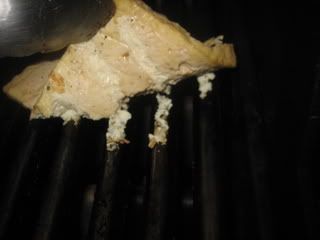


I've tried grilling tofu in the past, but found it difficult to keep it from sticking to the grill. It can be done, but would require too much attention when I have to also get out beef tenderloin and herb roasted chicken for a hundred people simultaneously. I wanted to come up with a method that would let me grill the tofu with little or no chance of it sticking. I also wanted to infuse it with a lot of flavor. Many recipes call for pressing the tofu between paper towels to get out the excess water, which I tried, but even with the extra firm variety, I found the tofu to be wet and crumbly. It also takes a lot of time and you have to keep changing the paper towels to wick away the moisture. I needed to come up with a way to really dry the tofu out so that I could oil it and get it to caramelize quickly and not stick to the grill. I settled on baking the tofu first to dry it out and get a little crust on the outside which helped it hold together.

As for the flavoring, I experimented with brining, marinades and dry rubs and ultimately came up with a hybrid method. Traditionally we think of marinating things before cooking them, but there are also dishes that involve immersing foods in a flavorful liquid after cooking them so that the seasoning is absorbed easily into the open cell walls of the hot meat or veggies (think of Thai beef salad, Spanish Escabeche and Argentinian BBQ in which hot meat just off the grill is immersed in a mixture of herbs, olive oil and lime juice.) For my dish, I started with a well seasoned mushroom broth and soaked the previously baked tofu in it overnight. Finally, I drained it well, dusted with a dry rub and then then grilled it.

OK, enough with the history lesson. Let's get down to the recipe.

Ingredients:
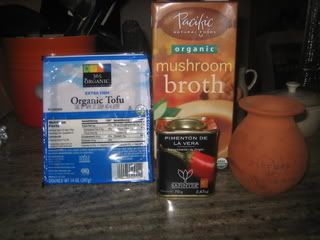


Extra firm tofu
Broth (I used mushroom but any kind would work)
Dried Herbs/Spices (I went with smoked Paprika and Herbes de Provence)
Extra Virgin Olive Oil
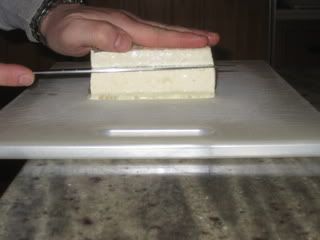


Start by slicing the tofu horizontally into three relatively even "steaks".

Technical note: Use a long thin bladed knife and a gentle sawing motion or the tofu will tear and fall apart.
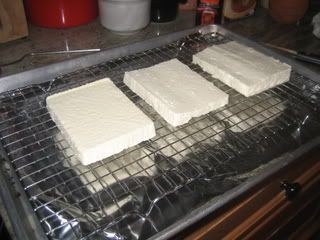


Place them on an oiled wire rack over a baking sheet and bake in a 400 degree oven for one hour, flipping the slices after the first 30 minutes. I know 400 sounds very hot, but these things hold a lot of moisture and you need to drive that out to firm it up and allow the seasoning to be absorbed.

While it's cooking prepare the seasoning liquid (it's technically not a marinade because I didn't add any acid and it's not a brine because it doesn't have that much salt). Pour the cold broth into an appropriately sized food storage container and season to taste. It should be well spiced, but be careful not to make it too salty. If you're using commercially prepared broth it has tons of salt and remember that we will be adding a spice rub and also a sauce at the end. It will get plenty of salt, you just want a liquid that will carry your herbs and spices to the center of the tofu.
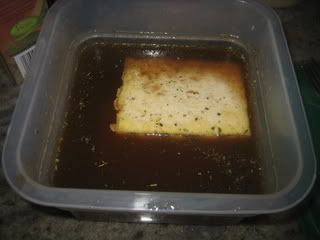


After the tofu has baked for an hour, drop the hot pieces directly into your cold seasoning liquid, cover and refrigerate for several hours or overnight.
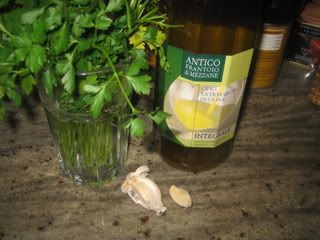


Next contemplate a sauce or glaze. You could brush them with bbq sauce which helps with the grill marks and gives a nice spicy sweet crunch, but in my case I went with Persillade, a mixture of parsley, garlic and olive oil which is often served with grilled meat in the south of France. Put some fresh parley leaves, a clove of garlic and a little sea salt into a mortar and bash it up with the pestle.
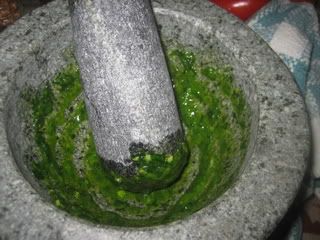


Add some olive oil and keep beating the heck out of it till you formed a smooth green paste, adding more olive oil as needed till you get a "brushable" consistency.

When you are ready to cook the tofu, preheat the grill on high, remove the "steaks" from the seasoning liquid and pat dry with a paper towel.


Sprinkle each side with the dry rub of your choosing (I simply used more smoked paprika, finely ground Herbes de Provence and a little salt). Generously oil both sides with olive oil and take them to the grill.
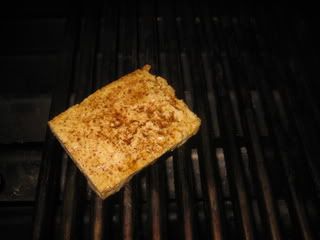


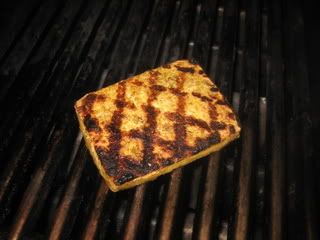
To get the pretty cross hatches, start with the tofu slices rotated 45 degrees to the grill grate and cook for about three minutes or until you have nice caramelized grill marks.
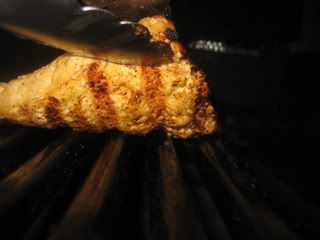


Then, rotate the slices 90 degrees without flipping them and cook for another three to four minutes.
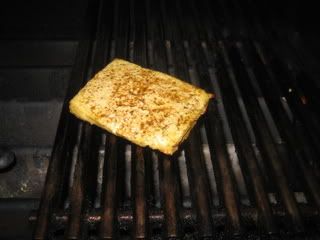


Flip to the other side and repeat till you have a nice crispy grilled tofu "steak".


Remove to a plate, brush with a generous amount of the Persillade and serve.
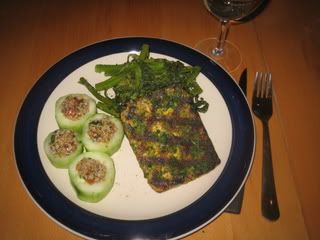


In this case I served it alongside some braised broccoli rabe and tabbouleh filled cucumber cups.

Tuesday, February 3, 2009

We'll Always Have Paris - Part Deux


When I travel overseas I like to fool myself into thinking that I am somehow more in tune to the local scene than the average "tourist". I make it a point to study local customs and learn a little of the language. I can manage to say "one beer" and "one more beer" in at least seven languages. Experience has taught me that if a restaurant has the menu translated into English, German and Japanese, the dining experience is usually "less than optimal". If the menu includes photographs of the dish next to each trilingual description, I head for the hills. Getting out of the hotel and going native is my choice whenever possible.


Chiko heard somewhere that people in Paris carry baguettes with them everywhere they go. This urban legend was actually confirmed, as we encountered numerous people walking down the street with baguettes firmly implanted in their armpits.


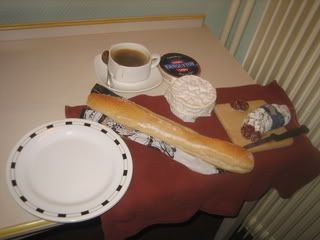
As part of my quest to fit in we purchased a baguette and took turns holding it throughout the rest of the trip. Saturday morning broke dark and gloomy, so we breakfasted on coffee, part of the previous mentioned baguette, a bit of cheese and some duck sausage that we picked up the day before.


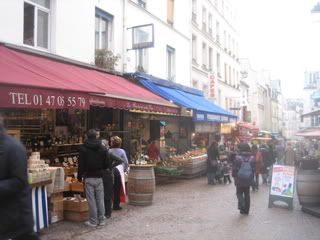
The market we saw near the train station was nowhere to be found, but we headed a few blocks over to Rue Mouffetard and explored the shops. Mouffetard is a market street with fixed shops that are open everyday (as opposed to the day markets which set up and tear down every 24 hours and rotate from neighborhood to neighborhood on a weekly schedule).

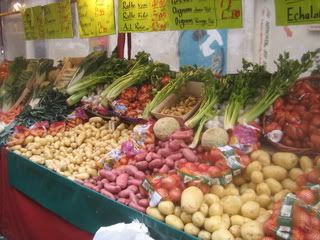
There were cheese shops, fishmongers, fruit and veg stands along with a variety of specialty purveyors of chocolates, coffee, teas, etc. Having lapsed recently from our fruit and vegetable challenge, we picked up some lovely apricots and cherries and snacked while we walked.


Once the market bug was out of our system and the sun peaked out from it's cloudy hiding place, we hopped on the metro and headed off to one of the most famous bakeries in the world. Poilane is a tiny shop specializing in pan au levain, a sort of French sourdough that is quite famous in the artisan baking community. In addition to the bread, we sampled some lovely butter cookies, but that's a story for another day.

All this wandering made us a bit peckish, so we popped into a neighborhood bistro for a bite of lunch.

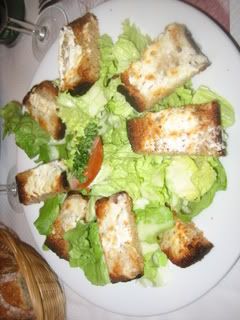
Chiko chose the chevre chaud, a salad topped with broiled goat cheese crostini.


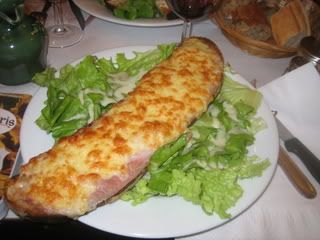
I thought I was going old school when I ordered a croque monsieur, but what I got was a thoroughly modern open faced sandwich of ham and cheese on a lovely piece of that Poilane sourdough bread. Jet lag was setting in so we walked back to the hotel and had a great afternoon nap.

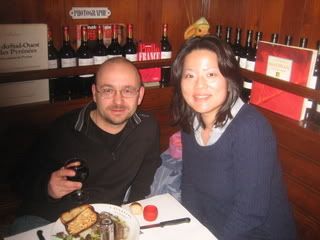
In the evening we headed back over towards Rue Mouffetard to explore the restaurant scene. We noticed several restaurants specializing in the cuisine of the Savoy region in the southeast of France, bordering Switzerland and Northern Italy. The restaurants were all decorated like ski chalets, with roaring fireplaces, exposed beams and even cuckoo clocks. The menus included a variety of fondues and other regional specialties. We settled on a restaurant and grabbed a table.


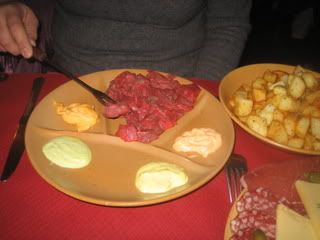
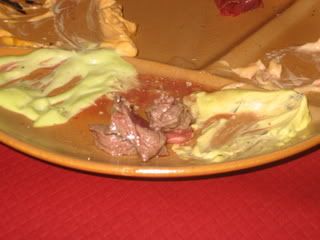
Chiko ordered Fondue Bourguignonne, which is a dish of beef cooked at the table in a fondue pot filled with hot oil.
It is served with a variety of dipping sauces and is actually similar to the Japanese dish Shabu Shabu.

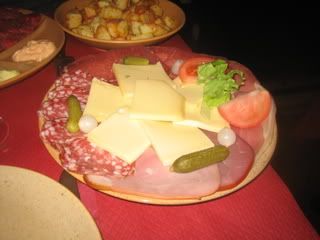
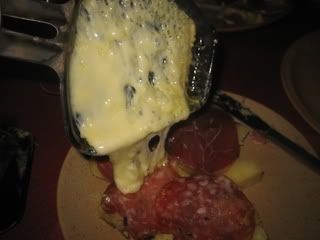
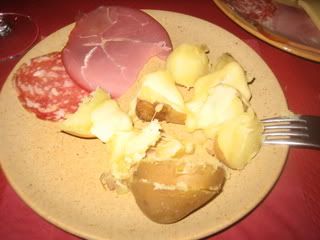
I went for Raclette, which is a sort of deconstructed fondue. The server brought a small electric broiler to the table, along with a plate of cured meats, cheese and boiled potatoes.


I broiled the cheese on a special raclette pan until it was nice and bubbly, then poured it over the meat and potatoes.


After such a rich dinner, we opted for coffee and a digestif in lieu of dessert then took a nice long walk.
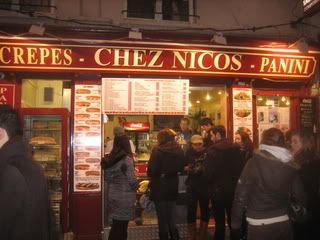
As the evening wound down we came upon a large crowd in front of a late night creperie. The chef was cooking and filling a variety crepes, both sweet and savory for the post bar crowd.
Figuring "what the hell, we're on holiday", we shared a chestnut creme filled crepe and called it a night.

Friday, January 23, 2009

We'll Always Have Paris - Finally!


Years ago Chiko and I were supposed to go to Paris together, but unfortunately she had to cancel her trip at the last minute. Ever since I have been wanting to bring her to France and show her the "City of Lights". I've been to Paris on business several times in the last year, and finally we were able to align our schedules so she could join me for my latest trip. We arrived this morning and headed straight to our hotel in the Latin Quarter. Getting off the Metro at Place Mongue, we immediately encountered a daily farmers market. It was nearly 1:00 in the afternoon so they were shutting down, but we'll be back bright and early tomorrow to check out the food.


After dropping our luggage in the room, we had a brief look at the Cathedral du Notre Dame and then immediately went in search of lunch! We headed over to Saint Germain and found a little bistro.

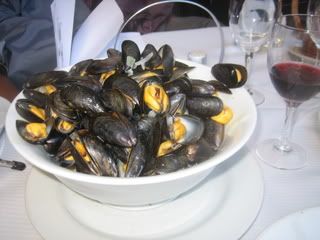
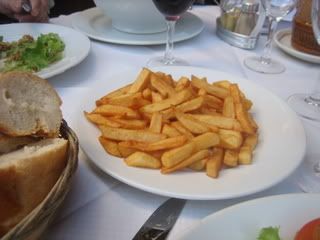
Chiko ordered Moules Frites, a classic dish of steamed mussels and french fries. To make this dish at home, melt a little butter in a large dutch oven and sweat some onions and celery. Add two pounds of mussels (scrubbed and debearded of course) and a cup of white wine. Bring to a boil, reduce heat and cover. Steam the mussels until they open and serve with french fries and/or some good crusty bread to soak up the juice from the bottom of the pot.


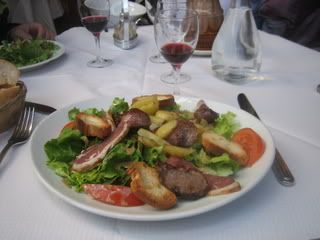
I ordered a salad with duck three ways. Slices of smoked duck breast, chunks of duck confit, sauteed duck meat and sliced potatoes (probably cooked in duck fat) topped a salad of lettuce, tomatoes and croutons.
After lunch we walked around and visited the Jardin des Plantes before a late afternoon nap to help get over our jet lag. For dinner, we went to a small restaurant that I ate at with my brother on my first visit to Paris. It specializes in the food and wine of the Languedoc region in the southwest of France.

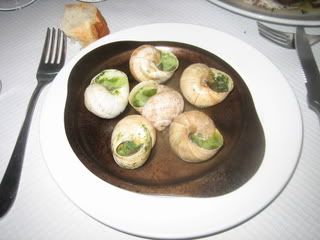
As an appetizer, Chiko ordered Escargot, which is basically a delivery system for butter and garlic.


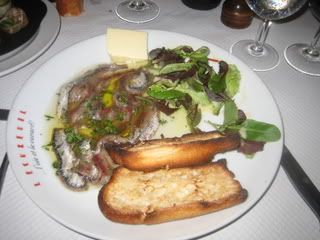
I had a fantastic appetizer of marinated anchovies. I'm guessing that the chef took fresh anchovies and salted them for a day or so before marinating them in vinegar and dressing with extra virgin olive oil. They were served with salad greens, butter and toasted bread. Very tasty....


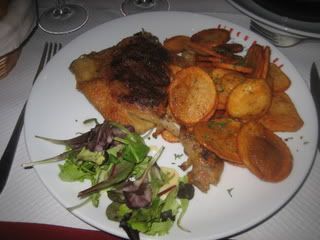
For her main course, Chiko had duck confit. You can buy this in gourmet stores or make it at home. To make your own confit, take several duck legs and pack them in a mixture of salt and herbs de provence. After salting the duck for a couple of days, rinse well, pat dry and place in a large dutch oven or roasting dish. Add a handful of whole garlic cloves and enough rendered duck fat to completely cover the duck legs. Bake at 250 degrees for three hours, cool and store covered in duck fat in the refrigerator for up to three months. To serve, remove a duck leg from the refrigerator and scrape off any excess duck fat, making sure to leave the skin of the duck intact. Heat a frying pan over medium high heat, cast iron is really good for this, and place the duck leg in skin side down. Cook for 5 to 6 minutes until the skin is golden brown and crispy, then turn over and cook for another 5 minutes and serve.


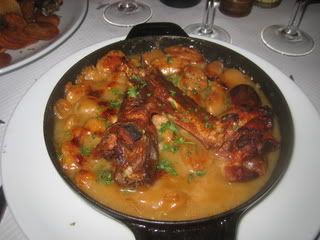
My main was a rustic french classic called cassoulet. It is a slow cooked casserole of beans along with a variety of duck and pork meat. When my dad had his restaurant we made this dish with white cannelini beans, duck confit and a garlicky sausage like kielbasa. At the restaurant this evening they used very large beans (possibly favas), along with duck confit, cured pork belly (unsmoked bacon) and a sausage that reminded me of a cotecchino only smaller.

For wine, we had a carafe of Madiran, a red wine from Gascony. It was strong and relatively tannic so it paired well with the rich food.


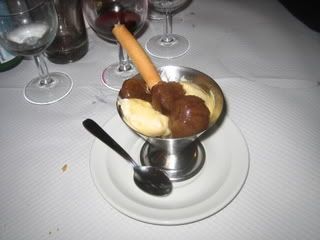
For dessert, Chiko had vanilla ice cream with candied chestnuts and I had a creme brulee with the interesting addition of prunes. The proprieter gave us a couple glasses of their homemade eau de vie, a sort of french grappa.

With all that food filling our bellies, we decided to take a nice long walk. We went up past St. Germain, across the Ile de la Cite and all the way to the Louvre. From there we crossed back to the left bank and followed the Seine all the way back to our hotel. Hopefully that two hour walk on a crisp, clear evening burned off some of those calories


!

Monday, January 5, 2009

Meet the Tagine


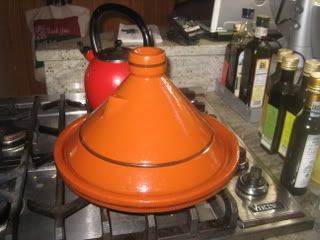
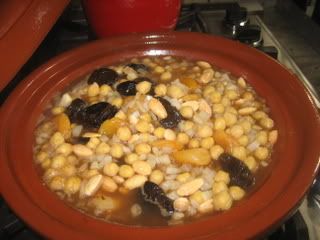
My favorite Christmas present of 2008 was this beautiful handmade Moroccan tagine, courtesy of the lovely Chiko! A tagine is a clay stovetop slow cooker which is usually used to make braised meat and vegetable dishes to serve over couscous. Tagine is also used to refer to any dish cooked in a tagine (sort of like the word casserole). The cone shaped lid collects the steam and keeps the ingredients very moist during long slow cooking.


Surprise, surprise, I put on a couple of pounds over the holidays, so I decided to cook a little lighter until I get back down to my fighting weight. This weekend I made a vegetable tagine which was rich, flavorful and satisfying, while still being relatively light and full of good stuff like fiber and protein thanks to chickpeas.


This is my own recipe, so it may not be totally authentic, but I based it on research I did online as well as in several Mediterranean/Middle Eastern cookbooks. To start, I made a Moroccan spice mixture which I keep on hand for seasoning meat, fish and veggies. The mixture is a derivative of the Marrakesh Rub in Steven Reichlen's Barbecue Bible.


Place the following in a dry frying pan and toast over medium high heat until the spices are fragrant, tossing frequently.


2 1/2 tablespoons coriander seeds
2 tablespoons cumin seeds
1 tablespoon black peppercorns
1/2 teaspoon cardamom seeds


Grind the toasted spices in a spice grinder, coffee mill or mortar and pestle. Add


2 tablespoons dry ginger
1 tablespoon ground cinnamon
1/2 teaspoon cayenne pepper
2 tablespoons kosher salt


Put this in an airtight container and keep in your spice cabinet for anytime you want a little middle eastern flavor in your food.


If you don't have a tagine, you can make this in a dutch oven or even a crockpot. The rest of the ingredient list is as follows:


(makes 4 servings)


2 cups cooked chickpeas (or 1 can rinsed and drained)
1 medium onion, chopped fine
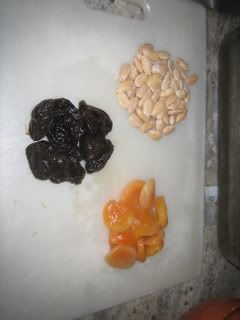
1/2 cup dried plums (a.k.a. prunes)
1/2 cup dried apricots
1/2 cup blanched almonds
3-4 cups vegetable stock (preferably homemade)


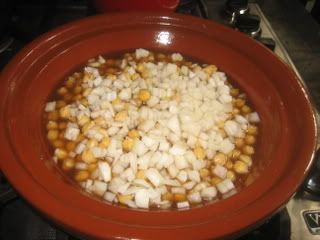
Start by placing the chickpeas and onions in the bottom of your tagine or dutch oven and sprinkle with a liberal amount of the spice rub (2-3 teaspoons), then cover with just enough veggie stock to just cover the peas, reserving the rest of the stock for later. Bring to a boil, lower to a simmer, cover and cook gently for 30 minutes.


Meanwhile, soak your apricots and plums in water to rehydrate them (30 minutes will do), then drain well.


Add the dried fruit along with the almonds to the tagine or dutch oven and add enough of the reserved veggie stock to just barely cover. Return to a simmer, cover and cook for 30 more minutes.


Taste and adjust seasoning if necessary by adding more spice rub or salt. Garnish with fresh chopped cilantro, and serve as is or over couscous if you like.


Nutritional analysis:
Serving size: about 8 ounces (by weight) Calories 330 Fat 10gm Fiber 14gm Protein 11gm


The fat content may seem a little high for a vegan dish due to the nuts, but it has virtually no cholesterol and tons of fiber so it's super healthy.